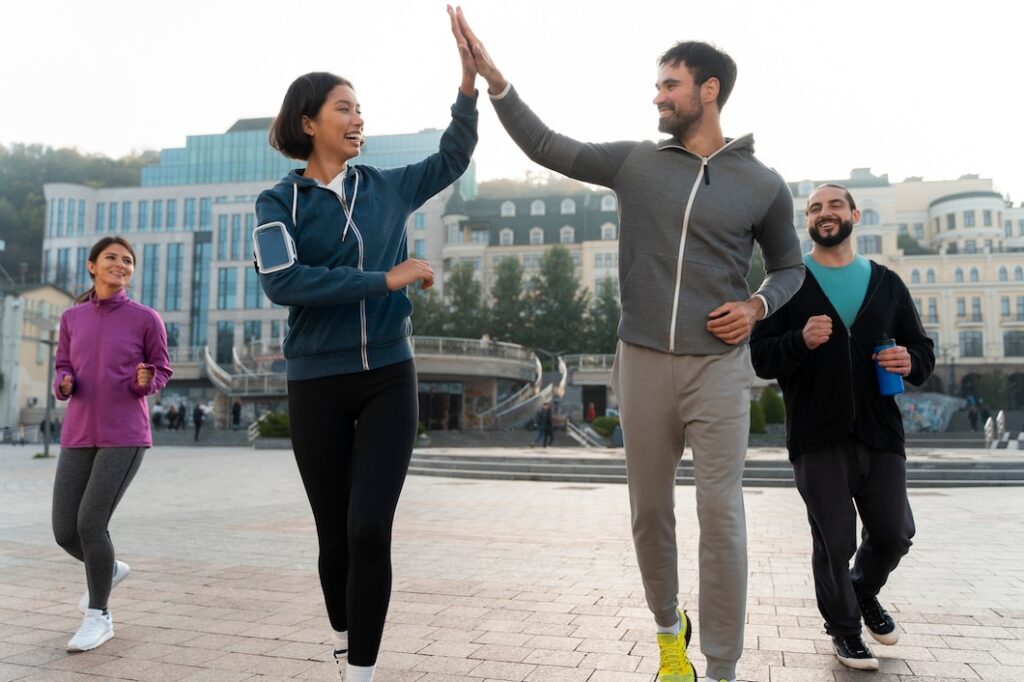
A striking example of a global shift in men’s health culture emerged in Bradford, UK, where post-prayer Pilates classes for men, hosted inside local mosques, went viral—drawing thousands of views and international attention. Reported widely in early 2026, these classes captured interest not because Pilates is new, but because the context is.
👉 Reference:
Pilates after prayers: men’s classes in Bradford mosques offer fitness and friendship — The Guardian, January 25, 2026
https://www.theguardian.com/uk-news/2026/jan/25/pilates-men-classes-bradford-mosque-fitness-friendship
What makes this trend powerful is not the workout—it’s the integration:
- Physical health is inseparable from social belonging
- Fitness happens within a trusted, culturally meaningful space
- Tradition and modern movement practices coexist rather than compete
This model resonates because it restores something many men have lost: health practices embedded in community and purpose, not isolated self-improvement routines.
Why This Model Works for Men
From a MENTECH perspective, this viral moment reveals a deeper truth about men’s health engagement:
men sustain practices when those practices reinforce identity, belonging, and contribution.
Gyms and apps often fail not because men lack discipline, but because they:
- isolate effort from meaning
- frame health as a private burden
- remove relational accountability
Community-led fitness reverses this. When movement is woven into shared rhythm—prayer, gathering, conversation—health becomes participatory rather than performative.
Men show up not just to train, but to belong.
Fitness as a Social Regulator
The Bradford classes highlight how the body regulates more effectively in social environments. Movement performed alongside others:
- lowers stress through co-regulation
- increases adherence through shared rhythm
- reduces self-consciousness and comparison
- restores enjoyment and play
This mirrors patterns seen globally in:
- men’s walking groups
- community martial arts
- faith-based wellness programs
- men’s circles that integrate movement and reflection
The common thread is not the activity—it is contextual safety.
A Conscious Reframing of Men’s Health Habits
This trend signals a shift away from health as solitary optimization toward health as shared practice.
Rather than asking men to:
- self-motivate endlessly
- track everything privately
- “fix” themselves in isolation
community-led models invite men into relational regulation. Effort is held by the group. Consistency is reinforced by presence. Identity is affirmed rather than questioned.
This reframing reduces dropout because it removes the internal battle.
Benefits of Community-Led Fitness Models
For men
- Higher long-term adherence to movement
- Reduced loneliness and isolation
- Improved mental health through belonging
- Greater enjoyment and intrinsic motivation
For communities
- Strengthened social bonds
- Health promotion without stigma
- Intergenerational connection
- Low-cost, high-impact wellness delivery
For public health
- Preventive health through participation
- Reduced burden on clinical systems
- Culturally responsive health engagement
When health practices are embedded in community, they scale organically.
MENTECH Context: Health Emerges Where Belonging Exists
MENTECH recognizes that men do not regulate best in isolation. Regulation improves when:
- effort is shared
- meaning is visible
- identity is affirmed
- routine is socially anchored
The Bradford example is not an anomaly—it is a prototype. It shows how modern men’s health can evolve by re-integrating body, culture, and connection, rather than treating them as separate domains.
This is why such stories go viral. They reveal a path forward that feels human.
Why This Trend Is Spreading Globally
Across cultures, men are searching for spaces where:
- health does not require explanation
- vulnerability is indirect but supported
- strength and softness coexist
Community-led fitness answers that need. It offers a form of healing that is quiet, relational, and sustainable.
The future of men’s health will not be built only in clinics or apps.
It will be built in shared spaces where movement, meaning, and belonging intersect.
And that future is already taking shape.
Reference
- Pilates after prayers: men’s classes in Bradford mosques offer fitness and friendship
The Guardian, January 25, 2026
https://www.theguardian.com/uk-news/2026/jan/25/pilates-men-classes-bradford-mosque-fitness-friendship
Read about: Mainstream Media & Cultural Platforms Are Elevating Men’s Wellness Topics